
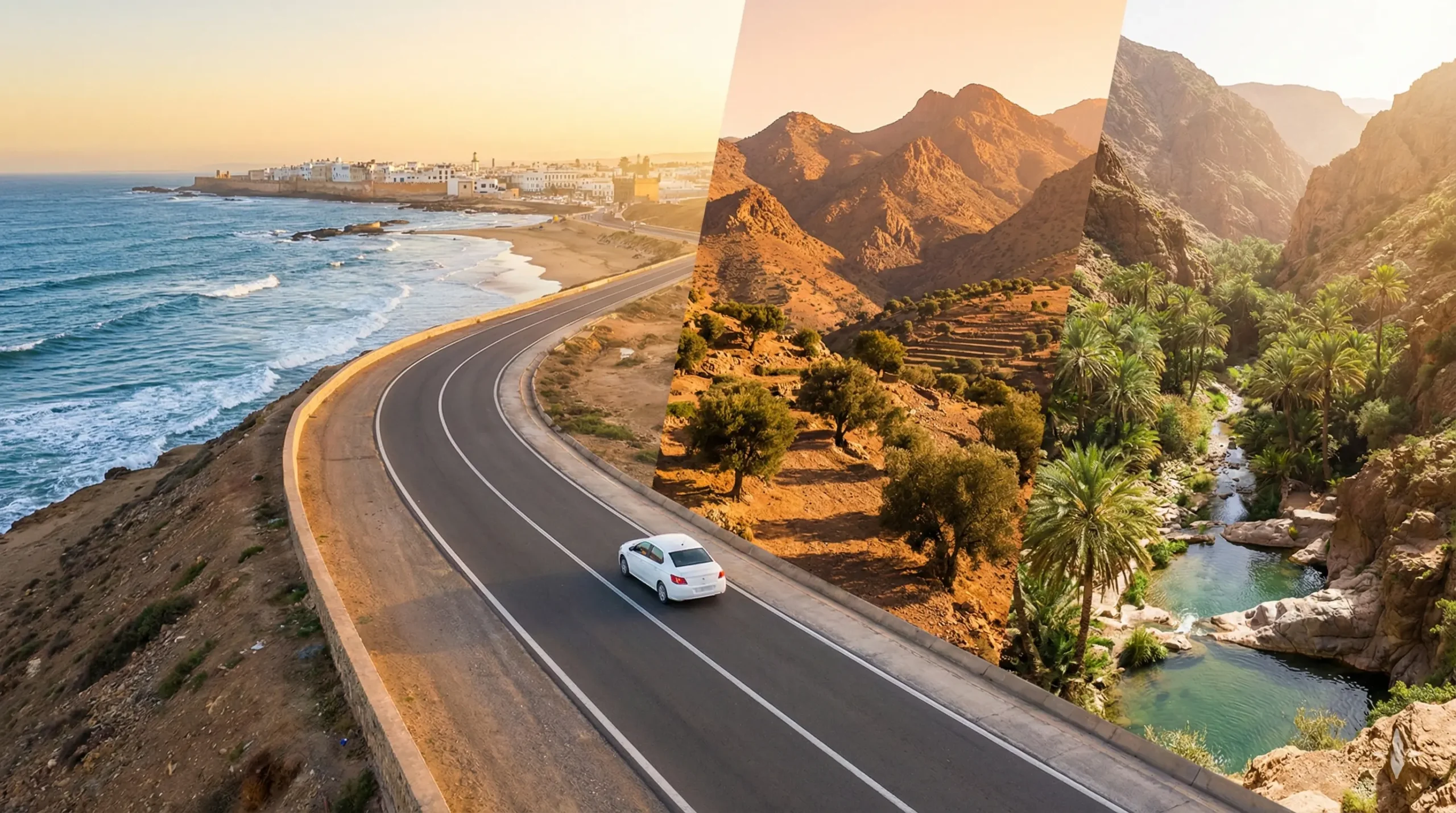
You land at Agadir airport, collect your rental car, and within 15 minutes you're driving. Most travelers immediately head to their hotel. The smart ones start exploring.
We've seen this pattern for years. The airport sits perfectly positioned between Morocco's most accessible day trips. North toward Essaouira's windy coast, east into the Anti-Atlas foothills, or straight north through banana plantations to mountain oases. Every route leaves directly from the airport exit, no backtracking through Agadir city traffic required.
Here's the honest truth: these aren't "hidden gem" routes. They're popular precisely because they combine accessibility with genuine Moroccan character. You don't need expedition-level planning or language skills. Just a reliable car, a full tank, and reasonable expectations about road conditions.
Quick Takeaways
- Paradise Valley offers the quickest escape (60km, 1 hour) with swimming holes and minimal hiking
- Essaouira makes the perfect coastal full-day trip (170km, 2.5-3 hours each way) with windsurfing and medina exploration
- Taroudant and Tiout combine mountain scenery with authentic Berber culture (110km total, full day)
- The Honey Road to Imouzzer delivers waterfalls and local beekeeping traditions (70km, half to full day depending on stops)
- Taghazout surf coast creates an easy half-day loop with multiple beach stops (40-60km depending on route)
- Standard sedans handle all these routes except Imouzzer (where higher clearance helps considerably)
Route 1: Paradise Valley - The One-Hour Escape
Distance from Airport: 60 km
Driving Time: 1 hour
Best Vehicle: Any car works, Duster provides easier parking area access
Difficulty: Easy paved roads, short unpaved parking approach
You exit the airport, turn north on N1 toward Essaouira, and within 20 minutes you're cruising through Agadir's northern sprawl. Taghazout appears on your left, a surf village we'll cover later. Continue past Aourir (locals call it "Banana Village" for obvious reasons once you see the plantations), then watch for the P1001 turnoff toward Paradise Valley.
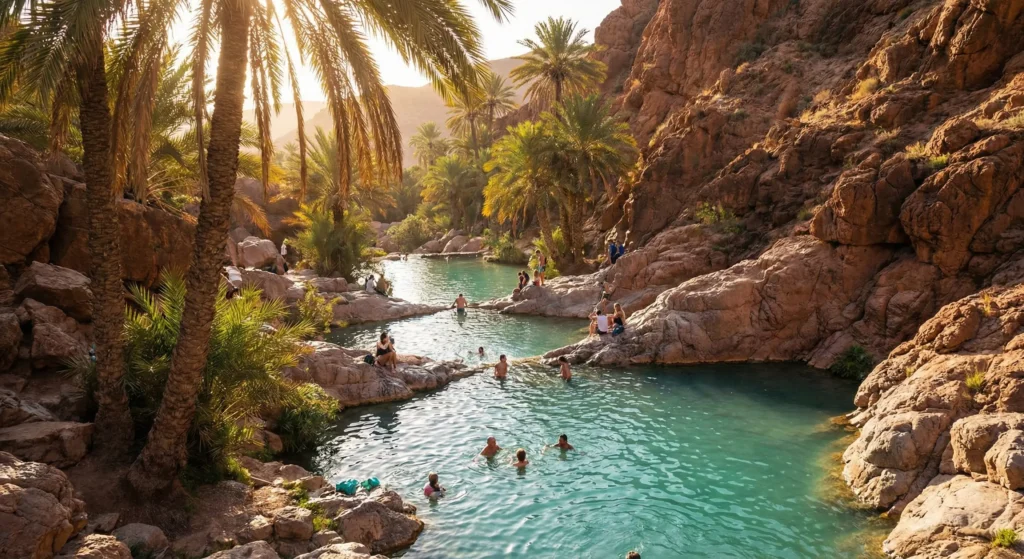
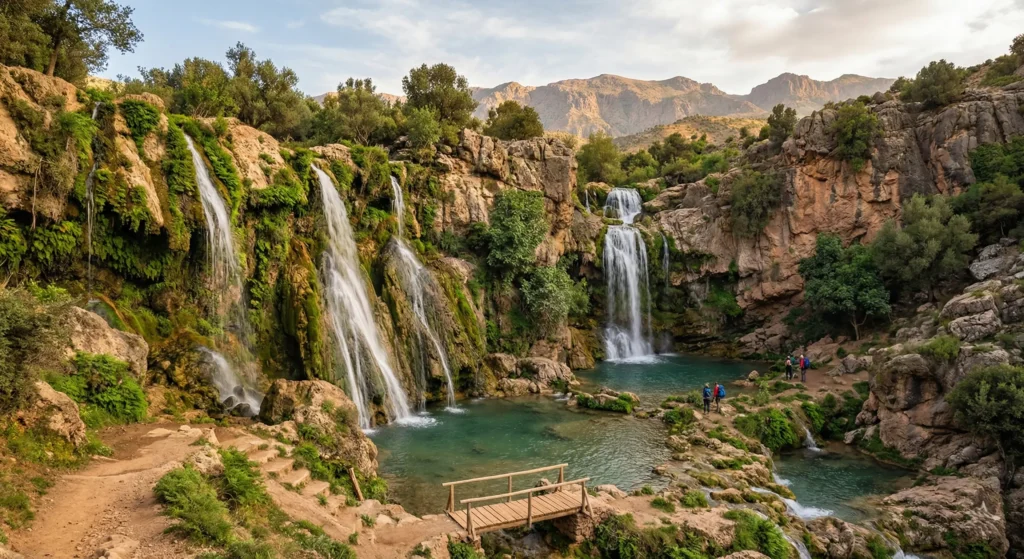
The name sounds like tourist marketing hyperbole. It isn't. This narrow gorge cuts through the Atlas foothills, creating a microclimate where palm trees thrive beside permanent water pools. Local families picnic here weekends, tourists swim in the natural pools, and nobody pretends it's undiscovered.
The Route Details
N1 north from airport (25 km, 20 minutes) → Right on P1001 at Aourir (15 km, 15 minutes through banana groves) → Follow signs to "Vallée du Paradis" (20 km, 20 minutes on winding mountain road) → Parking area appears suddenly on your left
Parking costs 20 dirhams, unofficial attendants will demand 50. The walk from parking to the main pools takes 15-20 minutes, mostly downhill on a rocky path. Wear actual shoes, not sandals. The first pools you reach are crowded. Keep walking 10 more minutes upstream for quieter swimming spots.
What We've Learned From Years of Sending Customers Here
Arrive before 11am or after 3pm. Midday brings tour buses from Agadir hotels. The small cafes along the river serve tajine and cold drinks but expect basic facilities and cash-only payment. Bring your own towel and water shoes if you're swimming. Water depth varies dramatically by season - winter and spring see deeper pools, summer can be disappointingly shallow.
The drive back takes the same route. Total trip time runs 3-4 hours if you're just swimming and returning, 5-6 hours if you stop for lunch and explore multiple pool areas. This works perfectly as a morning departure from the airport, afternoon return to check into your Agadir accommodation.
Route 2: Essaouira Coastal Drive - The Atlantic Explorer
Distance from Airport: 170 km
Driving Time: 2.5-3 hours each way
Best Vehicle: Any car, highway entire route
Difficulty: Easy modern highway, straightforward navigation
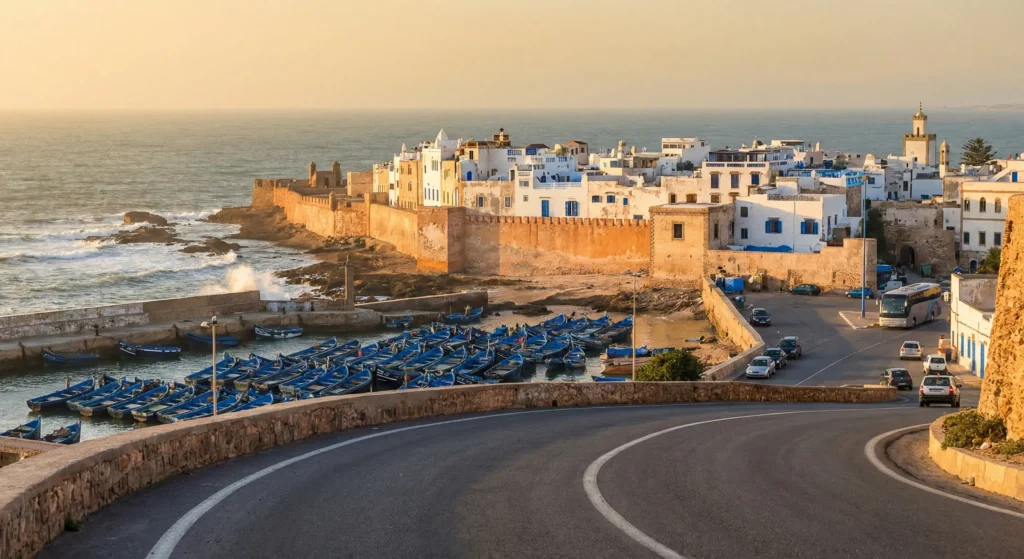
Essaouira represents Morocco's most accessible medina experience from Agadir. The drive follows N1 highway north along the coast, delivering exactly what you'd expect: ocean views, fishing villages, and increasingly windy conditions as you approach Morocco's wind and kitesurfing capital.
Leave the airport heading north (same start as Paradise Valley), but stay on N1 the entire route. No turnoffs, no complicated navigation. The highway quality ranges from excellent to acceptable, with occasional speed bumps through small towns. Police speed traps concentrate around Tamri and Tamanar, watch for 60 km/h zones.
The Stops Worth Making
Tamri Village (75 km from airport): Small fishing village with a lagoon where you might spot bald ibis (endangered species, protected). Basic cafes serve fresh fish. The beach here gets seriously windy by afternoon.
Tamanar (110 km): Argan oil cooperative central. Every tour stops here, so shops expect tourists. Prices aren't necessarily better than Agadir, but you'll see the traditional grinding process. If you skip other stops, at least use their clean restrooms.
Final 60 km: Coastal views improve significantly. The road runs closer to cliffs, eucalyptus forests appear, and Essaouira's Portuguese-influenced architecture starts showing in roadside villages.
Essaouira itself demands its own article. Quick orientation: park outside the medina walls (guarded lots cost 20-30 dirhams), enter through Bab Doukkala or Bab Marrakech, explore the UNESCO-listed medina, eat fresh fish at the port, browse artisan cooperatives, and brace yourself for persistent wind. It's charming, authentically Moroccan, and genuinely popular with both tourists and domestic travelers.
Timing and Planning
This requires commitment. Three hours driving each way, minimum 3-4 hours in Essaouira for meaningful exploration, plus stops. You're looking at a 10-11 hour day. Leave the airport by 8am, reach Essaouira around 11am, depart by 4pm, return to Agadir area by 7pm.
Can you do Paradise Valley and Essaouira in one trip? Technically yes, realistically no. The P1001 turnoff to Paradise Valley is on the route to Essaouira, but adding 2-3 hours of hiking and swimming to an already long day creates exhaustion, not enjoyment. Choose one or save Paradise Valley for your return trip if you're dropping the car in Essaouira.
Route 3: Taroudant & Tiout Oasis - The Mountain Culture Loop
Distance from Airport: 80 km to Taroudant + 30 km to Tiout
Driving Time: 1 hour to Taroudant, 30 minutes to Tiout
Best Vehicle: Any car handles it, route is paved
Difficulty: Easy highway then good secondary roads
This itinerary delivers what Paradise Valley only hints at: authentic Berber culture minus the tourist infrastructure. You'll drive through the Souss plain (Morocco's agricultural heartland), visit a walled city that actually functions as a city rather than a museum, then climb to a palm oasis where locals still farm using traditional irrigation.
Airport to Taroudant (80 km, 1 hour)
Exit the airport heading east toward Taroudant on N10. The highway cuts through endless orange groves, olive plantations, and greenhouse farms. This is Morocco's vegetable basket - the produce you'll eat in Marrakech likely grew here.
Watch for the goats-in-trees photo stop around the 40 km mark. Yes, goats actually climb argan trees. No, it's not staged (though some enterprising farmers do encourage their goats to climb when cars approach). Pull over safely, take photos, ignore aggressive souvenir vendors.
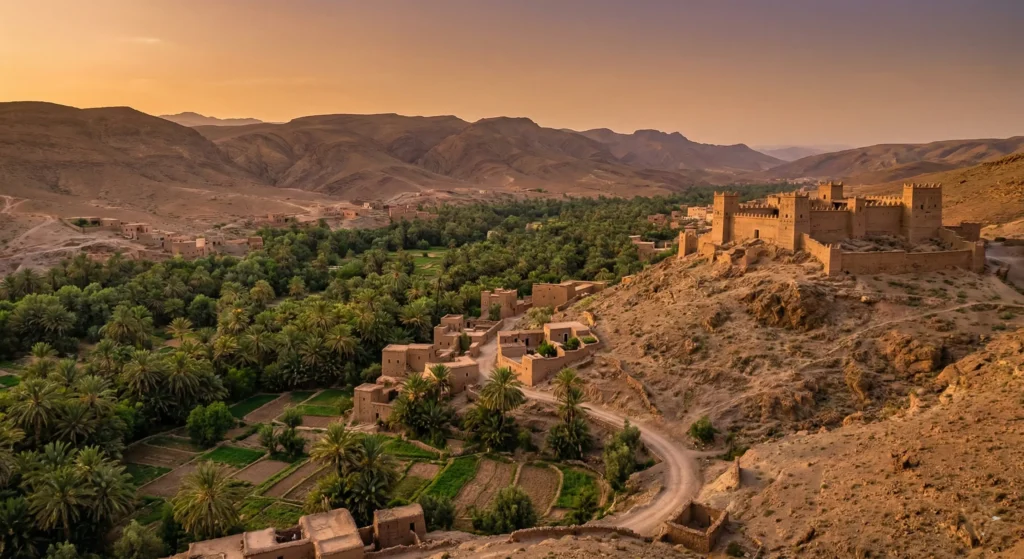
Taroudant appears suddenly after flat farmland - massive red-mud ramparts rising from the plain, snow-capped Atlas Mountains backdrop (winter and spring). The walls stretch 7.5 km around the old city, built in the 16th century when Taroudant served briefly as Saadi dynasty capital.
Exploring Taroudant
Park outside Bab Zorgane gate (the main entrance). Local guides immediately offer services - you don't need one for basic walking, but they're useful if you want to navigate the souks efficiently or visit specific artisan workshops.
The medina here differs dramatically from tourist-heavy Marrakech. It's a working city where locals outnumber visitors 50-to-1. The souks sell to Moroccans, not tourists, though you'll find plenty of handicrafts. Taroudant specializes in silver jewelry, leather goods, and traditional Berber carpets.
Grab orange juice or mint tea at a cafe on Place Assarag, the main square. This is where locals congregate, especially late afternoon when the heat breaks. The old Palais Claudio (now a hotel) allows non-guests to visit the gardens for the price of a drink.
Taroudant to Tiout (30 km, 30 minutes)
Leave Taroudant heading southeast on R1009 toward Tiout. The road climbs gradually into Anti-Atlas foothills, transitioning from agriculture to arid mountain landscape within 15 minutes.
Tiout village sits at 1,200 meters elevation, built on terraces overlooking a massive palm oasis. The contrast hits immediately - barren hillsides surrounding lush green palmeraie. Ancient irrigation channels (khettara system, hundreds of years old) bring spring water from higher elevations, creating an oasis supporting 3,000 palm trees.
The Tiout Experience
Park at the kasbah entrance. You'll see the old kasbah where portions of Ali Baba and the Forty Thieves (1954 French film) were shot. It's partially restored, partially crumbling, completely atmospheric.
Lunch happens here. Small family-run restaurants inside the kasbah serve traditional tajine and couscous with mint tea. It's simple, authentic, occasionally slow. Budget 1.5-2 hours for a full meal in Moroccan pace.
Donkey rides through the oasis are available (50-100 dirhams depending on route length and negotiation skills). It sounds touristy but it's genuinely how locals move goods through narrow palm grove paths where cars can't reach. The 45-minute loop takes you deep into the oasis, past working farms and traditional mud-brick homes.
Return Route
Same roads back. Total driving time round-trip from airport: 3 hours. Add 2 hours minimum in Taroudant, 2-3 hours in Tiout, and you're looking at a 7-8 hour day. Departure by 8:30am from the airport puts you back in Agadir area by 5pm.
Route 4: The Honey Road - Imouzzer Waterfalls & Mountain Villages
Distance from Airport: 70 km
Driving Time: 1.5 hours (winding mountain road)
Best Vehicle: Higher clearance recommended, Duster ideal
Difficulty: Moderate - paved but steep/narrow in sections
This route combines Paradise Valley's natural beauty with Taroudant's cultural authenticity, then adds legitimate mountain scenery. It's called the Honey Road because the region produces some of Morocco's finest honey, particularly thyme and lavender varieties from high-altitude wildflowers.
The Route North
Start exactly like Paradise Valley - N1 north to Aourir, right on P1001. But instead of stopping at Paradise Valley, continue deeper into the mountains. The road narrows, climbs more steeply, and delivers increasingly dramatic Atlas Mountain views.
You'll pass through several small Berber villages: Alma, Aksri, each with traditional architecture and occasional roadside honey vendors (the real deal, not tourist shops). The landscape shifts from palm groves to almond orchards (spectacular in February-March when blossoms appear) to scrubby highland vegetation.
Imouzzer des Ida Outanane
The village appears at 1,200 meters elevation, white houses scattered across hillsides, surrounded by fir and cedar forests. Thursday brings the weekly souk - worth timing if you want authentic rural market experience without tourist presence.
The waterfalls (Cascades d'Imouzzer) flow year-round but peak after winter rains. By summer they reduce to modest streams. The main cascade drops about 100 meters into natural pools. A 20-minute walk from village parking descends to the pools - rocky path, wear proper shoes.
The waterfalls area has small cafes serving honey-based specialties: honey bread, honey tea, amlou (almond-argan-honey paste). These are family operations, cash only, limited menus, genuine hospitality.
Honey Cooperatives and Beekeeping
The villages between Paradise Valley and Imouzzer host traditional beekeeping operations. Unlike argan oil cooperatives that cater heavily to tourists, honey producers here mostly sell domestically. You can visit production sites, taste varieties, buy directly from beekeepers.
Thyme honey (mild, golden) and euphorbia honey (stronger, darker) are regional specialties. Expect 150-300 dirhams per kilogram depending on variety and season. We've bought from these suppliers for years - quality is genuinely high, prices fair compared to city shops.
Advanced Option: Inzerki Apiary
For serious honey enthusiasts, Inzerki village (accessible via dirt track about 15 km from Imouzzer) hosts North Africa's largest traditional collective apiary - stone structures housing hundreds of hives, operating continuously since the 16th century. This requires higher clearance vehicle and local guide, but it's extraordinary.
Practical Considerations
The P1001 beyond Paradise Valley gets narrow in sections with steep drop-offs and no guardrails. Oncoming traffic requires careful navigation. We recommend Duster or similar for peace of mind, though confident drivers manage in sedans.
Combine this with Paradise Valley easily - stop at the valley on your way to or from Imouzzer. Total loop from airport: 140 km, 5-6 hours including stops. Or make it a full day with extensive hiking, swimming, and honey tasting.
Route 5: Surf Coast Loop - Taghazout, Imsouane & Beach Villages
Distance from Airport: Varies 40-120 km depending on route
Driving Time: Half-day to full day
Best Vehicle: Any car works perfectly
Difficulty: Easy coastal highway
This creates the most flexible itinerary. You can spend 3 hours or 8 hours depending on how many beach stops you make. The entire route follows excellent coastal roads north of Agadir, hitting Morocco's most accessible surf breaks and laid-back beach villages.
Taghazout (20 km, 25 minutes from airport)
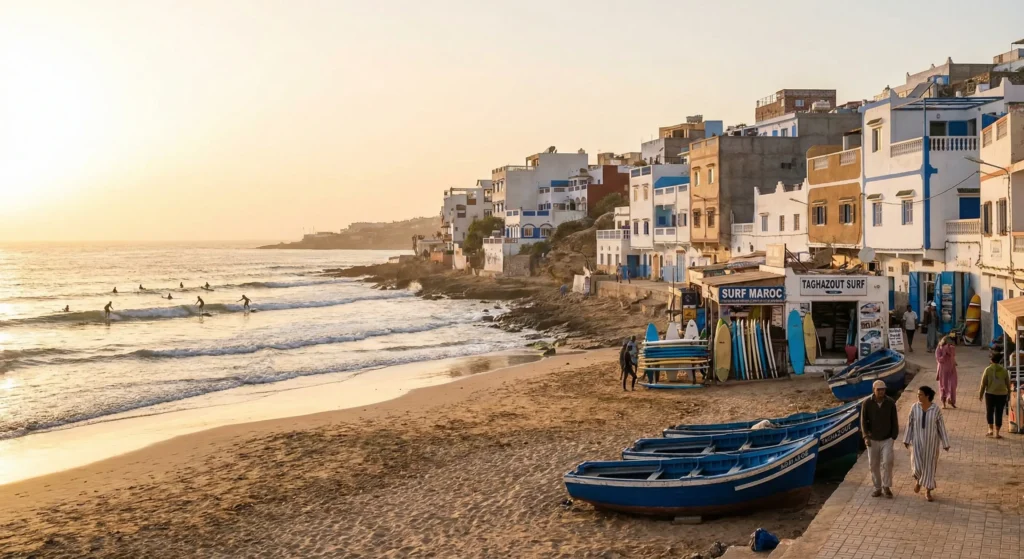
Exit airport, head north on N1, watch for Taghazout signs. This former fishing village transformed into Morocco's surf capital over the past 20 years. Hostels, surf shops, yoga studios, and healthy-eating cafes now dominate the waterfront.
Park near the main beach and walk the coastline. Anchor Point, Killer Point, and Hash Point breaks attract surfers year-round. You'll see dozens of surf schools offering lessons (200-300 dirhams for 2-hour beginner session including board rental).
The village itself is small - you can walk end-to-end in 15 minutes. Cafes serve smoothie bowls and avocado toast alongside traditional tajine. It's pleasant, slightly artificial in its beachtown perfection, and genuinely popular with international surfers and Moroccan weekenders.
Tamri (55 km, 45 minutes)
Continue north on N1 past Paradise Valley turnoff. Tamri feels more authentically Moroccan than Taghazout - working fishing village, basic infrastructure, locals significantly outnumbering tourists.
The beach stretches wide with powerful surf. Bald ibis (endangered species) nest in nearby cliffs - Morocco hosts the world's last viable wild population. February-July offers best viewing, though you need binoculars and patience.
Banana plantations surround Tamri. Small roadside stands sell fresh bananas cheaper than anywhere else in Morocco. They're small, extremely sweet, different variety than standard Cavendish.
Imsouane (85 km, 1 hour 20 minutes)
The furthest point on this loop, Imsouane offers two distinct surf breaks: The Bay (perfect beginner waves, gentle longboard conditions) and Cathedral Point (advanced right-hand point break, one of Africa's longest waves).
The village clusters around a small fishing port. Fresh fish restaurants line the beach, serving catches grilled to order. It's more low-key than Taghazout, less developed, attracting surfers seeking quieter atmosphere.
Sidi Kaouki (past Essaouira, only if doing full coastal route)
This extends the trip significantly (145 km from airport, 2+ hours), combining this route with the Essaouira drive. Sidi Kaouki sits south of Essaouira, a windswept beach village known for kitesurfing and horseback riding along endless sand.
Only worth adding if you're doing a multi-day coast exploration, not a day trip from the airport.
Loop Options
Short Loop (Half-Day): Airport → Taghazout → Tamri → Return = 110 km, 4-5 hours with beach stops
Medium Loop (Full Day): Airport → Taghazout → Paradise Valley → Tamri → Return = 140 km, 6-7 hours
Long Loop (Full Day): Airport → Taghazout → Tamri → Imsouane → Return = 170 km, 8-9 hours
Each village has parking (paid in tourist spots, free in fishing villages), cafes, restrooms. Roads are excellent throughout. This works perfectly as a flexible "see how it goes" route where you can turn around at any point based on time and energy.
Vehicle Selection for These Routes
You've seen us mention vehicle types throughout these itineraries. Here's the straight answer about what you actually need:
Standard Sedan (Dacia Logan, Hyundai i10) Works For:
- Essaouira coastal highway (100% paved, excellent conditions)
- Taroudant and Tiout (paved throughout, good surfaces)
- Taghazout and surf coast loop (coastal highway, perfect roads)
- Paradise Valley access road (paved to parking area, though tight turns)
Higher Clearance Recommended (Dacia Duster) For:
- Paradise Valley parking area and approach paths (unpaved final section benefits from clearance)
- Honey Road to Imouzzer (narrow mountain roads, occasional rough patches, psychological comfort on steep sections)
- Any route where you want to explore beyond main roads
You Don't Need True 4x4 For Any of These
Notice we haven't mentioned Land Cruisers or Jeeps. These five routes are Morocco's most accessible adventures from Agadir specifically because they don't require off-road capability. They're paved or well-maintained graded roads that regular cars handle fine.
The Duster at 38 EUR/day provides the sweet spot: higher seating position for better visibility on mountain curves, adequate clearance for rough parking areas, AWD for occasional unpaved stretches, without the cost and fuel consumption of true 4x4 vehicles.
Frequently Asked Questions
Can I do Paradise Valley and Essaouira in one day?
Technically possible, realistically exhausting. Paradise Valley adds 2-3 hours to the Essaouira trip. You'd need to leave the airport by 7am, briefly stop at Paradise Valley (swimming cut short), rush through Essaouira, and return late evening. We recommend choosing one or doing Paradise Valley as a separate half-day trip.
Which route works best for families with young children?
Paradise Valley wins for flexibility and shorter duration. Kids can swim, explore pools, tire themselves out in 2-3 hours, then return to hotel. Taghazout beach loop offers similar advantages with sandcastle potential. Essaouira involves too much driving for restless children.
Do I need to speak French or Arabic for these routes?
Not necessarily. Paradise Valley and Taghazout operate largely in English due to tourist volume. Taroudant, Tiout, and Imouzzer benefit from basic French phrases but locals manage communication through gestures and numbers. GPS handles navigation, menus are visual, and most transactions involve pointing.
What's the best time of year for these road trips?
October-April provides optimal conditions: comfortable temperatures, green landscapes from winter rains, snow on Atlas peaks, waterfalls flowing properly. Summer (June-August) brings extreme heat, reduced water flow at Paradise Valley and Imouzzer, and crowded beaches. Spring (March-April) adds almond blossoms and wildflowers to mountain routes.
Can I visit Marrakech as a day trip from Agadir airport?
Distance is 250 km, 3+ hours each way on excellent highway. It's possible but brutal - 6+ hours driving leaves minimal time in Marrakech. Better to overnight there or save it for a separate trip. These five routes offer better day-trip balance.
Are these routes safe for solo female travelers?
Yesn These are well-traveled tourist routes, not remote areas. Paradise Valley and Taghazout see international visitors daily. Taroudant and Imouzzer are working communities where foreign tourists are common. Standard advice applies: dress modestly, avoid hiking alone in isolated areas, ignore aggressive vendors professionally.
The Honest Assessment
These five routes represent Agadir's greatest advantage as a Morocco base: accessibility without compromise. You get mountain oases, Atlantic coastline, authentic medinas, and Berber villages, all within 2 hours' drive on mostly good roads.
They're not "hidden secrets" that only locals know. They're popular precisely because they deliver Moroccan experiences without requiring expedition planning, perfect Arabic skills, or tolerance for serious discomfort.
Paradise Valley sees tour buses daily. Essaouira fills with European weekenders. Taghazout hosts international surf crowds. And that's fine. The Morocco you experience on these routes - the landscapes, culture, food, interactions - remains genuine even when shared with other travelers.
Pick your car based on actual requirements, not aspirations. Most of you will be perfectly served by our 23 EUR/day sedans for the coastal routes and Taroudant. The Duster makes sense for Paradise Valley plus Imouzzer if you plan both. True 4x4 vehicles are unnecessary for anything covered here.
Start your Morocco exploration the moment you leave the airport. These routes wait.