
A couple pulled us aside last month after their Agadir airport pickup. They'd just been fined 400 dirhams (roughly 40 euros) for going 65 km/h in a 60 km/h zone. Five kilometers over. The police officer was polite, professional, and absolutely unyielding. They paid on the spot and spent the rest of their trip obsessively watching their speedometer.
Morocco enforces traffic laws strictly, especially with tourists in rental cars. This isn't corruption or targeting foreigners, it's how the system works across the board. If you're planning to drive your car rental Agadir airport beyond the city, understanding Moroccan driving laws isn't optional. It's the difference between a smooth road trip and expensive, stressful encounters with police.
Quick Takeaways
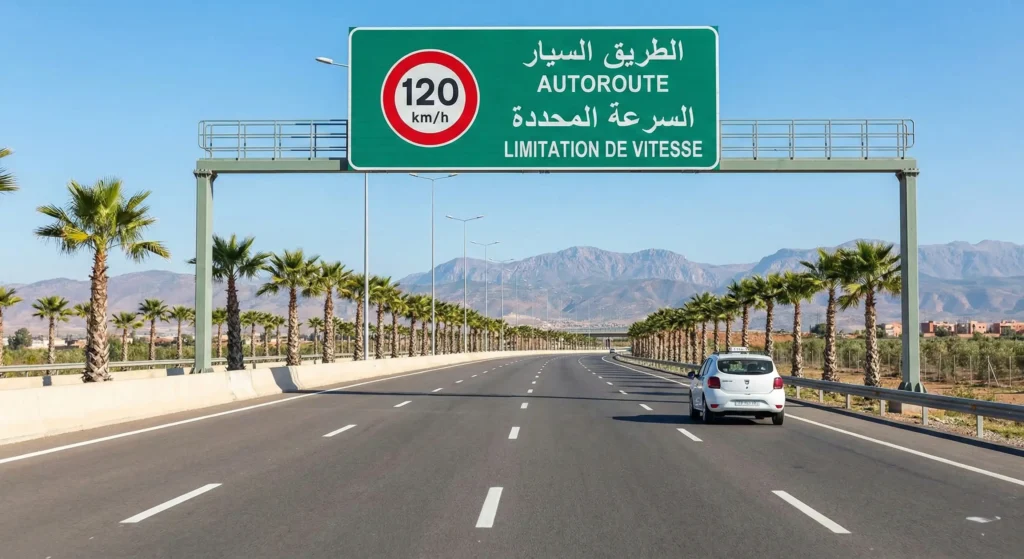
- Speed limits are rigidly enforced: 60 km/h in cities, 100 km/h on national roads, 120 km/h on highways (even 5 km/h over gets fined)
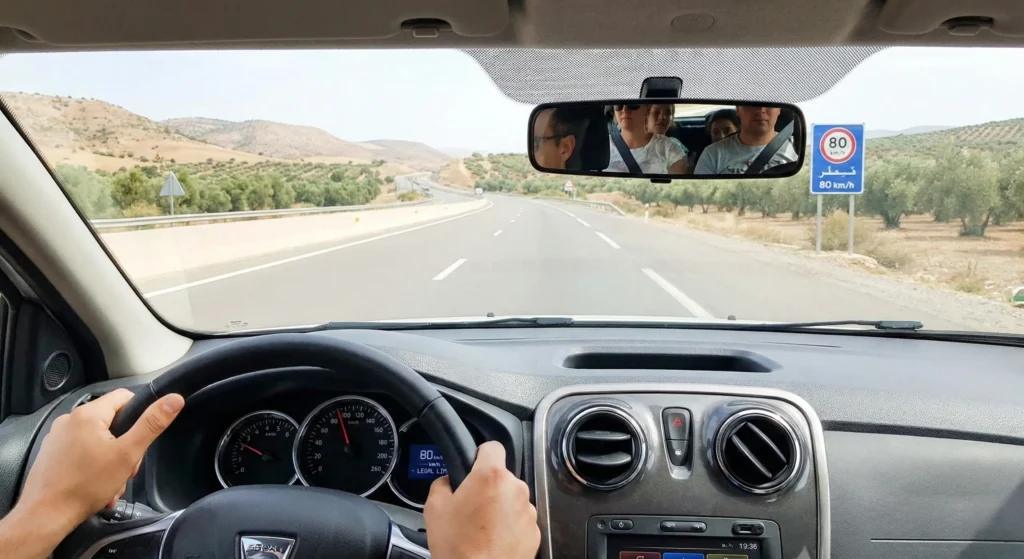
- Seat belts are mandatory for all passengers, front and back seats
- Mobile phone use while driving is prohibited unless using hands-free systems
- Blood alcohol limit is effectively zero (0.00% BAC) with severe penalties for violations
- Police checkpoints are routine throughout Morocco (carry documents: passport, license, rental contract, insurance)
- Fines are paid on-site in cash; officers issue official receipts
Speed Limits: Zero Tolerance Enforcement
Moroccan authorities don't mess around with speed limits. The standard limits are straightforward:
Urban areas: 60 km/h
National roads and expressways: 100 km/h
Autoroutes (toll highways): 120 km/h
What catches tourists off guard is the rigid enforcement. Speed cameras are everywhere on major routes, including fixed installations and mobile radar units. Police use handheld devices at checkpoints. Even minor violations (5-10 km/h over the limit) result in 300-400 MAD fines.
The other complication is frequent speed limit changes. You'll be cruising at 100 km/h on a national road when suddenly the limit drops to 60 km/h, then 40 km/h, then back up to 100 km/h within a few kilometers. These changes often indicate military installations, unmarked turnoffs, or checkpoint zones. Pay attention to signage even when the reason for the change isn't obvious.
If you see other drivers flashing their headlights at you, it usually means there's a police checkpoint or speed trap ahead. Moroccan drivers help each other out this way, and tourists benefit from this informal warning system too.
The Right Side of the Road
Morocco drives on the right side, same as continental Europe, the United States, and most of North America. If you're from the UK, Australia, or other left-side countries, this requires adjustment.
At intersections without clear signage or traffic lights, vehicles approaching from the right have priority. This is the standard European "priority to the right" rule. In practice, Moroccan driving involves a lot more negotiation and eye contact than rigid rule-following, but legally, right-side priority applies.
Roundabouts can be confusing because some use traditional rules (yield to traffic already in the circle) while older roundabouts sometimes give priority to entering traffic. Traffic lights on roundabouts add another layer of complexity. Watch what other drivers do and proceed cautiously.
Mandatory Seat Belt Usage
Seat belts are required for all vehicle occupants. This applies to front seats everywhere and back seats on all roads. The law changed in 2005 to include rear passengers, but enforcement varies. In cities and on highways, police definitely check. Fines for non-compliance run 150-400 MAD.
Child car seats are not strictly mandated or enforced in Morocco, but we strongly recommend using them if you're traveling with young children. Most rental companies offer child seats for 10 euros per rental period. The lack of legal enforcement doesn't make it less important for safety.
Zero Tolerance for Alcohol
Morocco's legal blood alcohol limit for drivers is 0.00%. Not 0.05% like much of Europe. Not 0.08% like the US. Zero.
In practice, this means you cannot have any alcohol in your system while driving. Even a single beer with lunch puts you over the limit. Violations carry severe penalties including hefty fines (3,000+ MAD), license suspension, vehicle impoundment, and potential imprisonment.
Police conduct random breath tests at checkpoints. If you're planning to drink, arrange alternative transportation. Taxi services and ride-sharing apps operate in major cities. Your rental car should stay parked.
Mobile Phone Restrictions
Using a mobile phone while driving is prohibited unless you're using a hands-free system. Holding your phone, texting, or using navigation apps with the device in your hand all violate the law. Fines range from 150-400 MAD.
Mount your phone properly if you're using it for GPS navigation. Voice-controlled systems are fine. Pulling over completely to make calls or check maps is always legal and much safer on unfamiliar roads.
Required Documentation
You must carry these documents at all times while driving:
- Valid driver's license from your home country
- Passport as proof of identity
- Rental contract showing you're authorized to drive the vehicle
- Insurance documents provided by the rental company
An International Driving Permit (IDP) is not legally required for most foreign licenses, but it's recommended if your license isn't in Latin script (Arabic, Cyrillic, etc.) or doesn't include a photo. Some rental companies require IDPs; check during booking.
Police checkpoints are routine in Morocco. You'll encounter them frequently, especially on major routes and when entering or exiting towns. Officers are generally polite with tourists. They'll ask to see your documents, verify everything is in order, and wave you through. The process takes 1-2 minutes.
If you've violated a traffic law, officers issue an official fine with a receipt. You pay on the spot in cash (dirhams). Request a receipt for every payment. Legitimate fines are documented; anything informal is suspicious.
Understanding Traffic Signals and Signs
Morocco uses international traffic sign standards similar to European systems. Stop signs are octagonal and red (text in Arabic, but the shape and color are unmistakable). Speed limit signs are round with red borders. Directional signs appear in Arabic, often with French translations, especially in tourist areas.
Traffic lights follow the universal red-yellow-green system. One quirk is that traffic lights are sometimes positioned differently than you might expect, sometimes off to the side or mounted lower than in other countries. Look carefully at intersections.
Road markings matter legally. Solid white lines mean no overtaking. Dashed lines permit passing where visibility allows. Crossing solid lines to overtake can result in fines even if the road seems empty.
Horn Usage is Communication
In Morocco, the car horn is a communication tool, not just a warning device. Drivers honk to:
- Indicate "I'm here" when approaching blind curves
- Thank other drivers for letting them pass
- Signal "it's safe to overtake me" on long uphills
- Navigate tight spaces in cities
- Greet friends (yes, really)
Don't interpret every horn blast as aggression. It's part of the local driving culture. That said, excessive honking in residential areas (especially at night) is considered rude. Use your horn purposefully, not constantly.
Night Driving Considerations
We strongly advise against driving at night outside major cities. Rural roads often lack street lighting entirely. Road markings can be worn or invisible. Pedestrians, cyclists, and animal-drawn carts use roads without reflectors or lights. Potholes and obstacles become hazards.
If you must drive after dark, reduce speed significantly, use high beams when appropriate (dip for oncoming traffic), and stay extremely alert. Many accidents in Morocco occur at night for these exact reasons.
Toll Roads and Payment
Morocco's autoroutes (toll highways) are excellent quality and the fastest way to travel between major cities. Tolls are reasonable: Agadir to Marrakech costs about 72 MAD, Tangier to Marrakech around 217 MAD.
Toll booths accept cash (dirhams only) and cards (Moroccan bank cards primarily; foreign cards sometimes work but don't rely on it). Keep small bills handy. Some toll stations have attendants who can make change; others are automated.
Frequently Asked Questions
What happens if I get pulled over at a checkpoint?
Slow down when you see officers, stop completely when directed, turn off your engine, and keep your hands visible. Have documents ready. Officers will verify your license, passport, rental contract, and insurance. If everything is in order, they'll wave you through. Be polite and patient.
Can I turn right on red lights?
No. Red means stop and wait for green. There's no "right on red" rule in Morocco like in some countries. Wait for the light to change.
Are there specific rules for roundabouts with traffic lights?
Yes. If you're already in the roundabout when your section turns red, stop and yield to traffic entering from the green light direction. It's confusing initially; watch what other drivers do.
What if I can't pay a fine on the spot?
Officers may escort you to the nearest police station or gendarmerie to pay. Fines are official and documented. Never attempt to bribe an officer; this can result in arrest. Always request a receipt.
Do I need to stop at every police checkpoint?
Only if officers signal you to stop. Many checkpoints wave tourist vehicles through quickly. Slow down as you approach, make eye contact with officers, and proceed if waved on.
Is it legal to park on the street?
In cities, look for blue zones indicating paid parking. An attendant (often wearing a vest) will approach to collect a small fee (5-10 MAD typically). Never park on red-and-white striped curbs; these are no-parking zones.
What should I do if I'm involved in an accident?
Stop immediately. Do not move vehicles. Call the police (emergency number: 19). Take photos of damage, exchange information with other parties, and wait for officers to arrive and file a report. You'll need this report for insurance claims.
Are speed cameras clearly marked?
Not always. Some are signed in advance; others are not. Assume speed enforcement can occur anywhere and maintain legal limits consistently.
Driving Defensively in Morocco
Moroccan road culture differs from many Western countries. Lane discipline is looser. Pedestrians cross highways. Motorcycles weave through traffic. Donkey carts share roads with cars. This isn't chaos, it's a different system that works through constant awareness and communication.
As a tourist, your job is to drive more defensively than you might at home. Expect the unexpected. Leave extra following distance. Don't assume everyone will follow rules you're used to. Watch for hand signals and horn communication.
The good news? Moroccan drivers are generally patient with obvious tourists. If you're going slower or seem uncertain, most will accommodate rather than get aggressive.
The Real Rule: Stay Alert and Legal
Morocco's driving laws exist for good reasons. The country has worked hard to reduce traffic fatalities through strict enforcement and better infrastructure. As a visitor, respecting these laws keeps you safe, keeps you out of expensive legal trouble, and shows respect for local regulations.
When you pick up your rental from us at Agadir airport, we walk through the key rules briefly. But reading this guide beforehand means you're prepared, not learning on the fly. Your Morocco road trip should focus on incredible scenery and experiences, not police interactions and fines.
Drive safely, follow the rules, and enjoy the freedom of exploring Morocco at your own pace.